
Do Your Restaurant’s Systems Work on Every Shift?
Strong systems require clear communication, shared understanding, and management follow-through.
By Jeff Fritz | Jeff Fritz Foodservice
The Operator’s Table
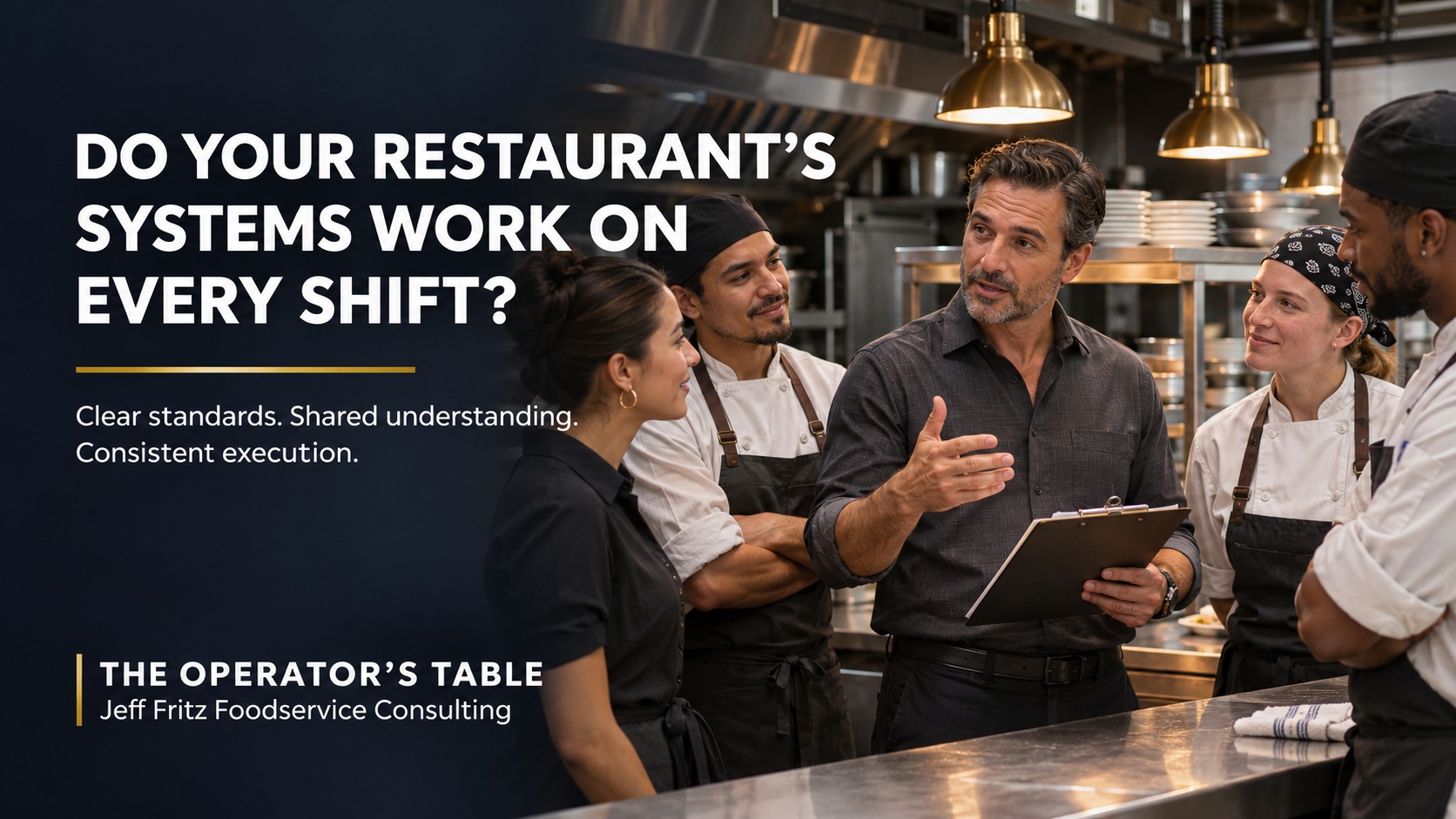
I believe one of the most important aspects of running and maintaining a successful restaurant is having strong systems in place—and making sure the entire staff understands them.
Every employee, on every shift, needs to know what is expected, how to respond when something happens, and who needs to be informed.
Creating procedures is only the beginning. Management must teach them, reinforce them, and consistently validate that they are being followed.
You don’t want to discover during a Friday night rush that your systems are nothing more than binders on a shelf or checklists on the wall.
Would Your Team Give the Same Answer?
Ask several employees across different shifts how they would handle the same operational situation.
What happens when an item becomes unavailable during service? How do you handle a guest complaint? What do you do when a delivery arrives short?
The wording of their answers may differ, but the essential steps should align. Employees should understand their responsibilities, who has decision-making authority, and how information moves through the restaurant.
If everyone describes a different process, management has a gap to address.
That gap becomes much more expensive when it reveals itself during service.
A Small Problem Can Quickly Become Everyone’s Problem
Consider what happens when the kitchen runs out of a popular menu item.
One cook tells a server. Another assumes the manager already knows. The manager is addressing a guest concern. Meanwhile, servers continue selling the item, and online orders keep coming in.
Now the restaurant has tickets it cannot fulfill, disappointed guests, delayed meals, and frustrated employees.
The shortage created the initial problem. Inconsistent communication allowed it to spread.
An established system should make the response clear:
- Who confirms that the item is unavailable?
- Who informs management and the service team?
- Who updates the POS and applicable online ordering channels?
- What alternatives can employees offer?
- Who addresses orders already placed?
- Who communicates when the item becomes available again?
Those decisions should be understood before the situation occurs.
Management Must Be on the Same Page First
A restaurant cannot expect consistent execution when its managers give conflicting instructions.
The opening manager follows one process. The evening manager accepts another. Weekend employees learn shortcuts from whoever happens to train them.
Eventually, the restaurant develops several versions of the same standard.
That creates confusion and makes accountability difficult. An employee may be following exactly what one supervisor taught them while being corrected by another.
Management must agree on the procedure, model it consistently, and communicate changes to every affected employee.
Explaining a change at Tuesday’s meeting does not complete the job if Friday’s staff never receives the information.
Reading a Procedure Does Not Establish Understanding
Training needs to go beyond handing someone a manual and asking whether they understand it.
Employees should see the process demonstrated, practice it, and explain their role.
Instead of asking, “Do you know how to handle a guest complaint?” present a realistic situation:
“A guest says their meal arrived cold while you are helping another table. Walk me through what you would do.”
The answer gives management an opportunity to identify uncertainty before it affects a guest.
Brief preshift discussions can reinforce these expectations. Review one procedure, explain why it matters, and ask employees to describe the appropriate response.
Over time, that repetition helps make the response automatic and unified.
Strong Systems Give Employees Confidence
Employees work more confidently when they know what they can resolve independently and when they should involve management.
A server may be authorized to arrange a replacement meal, while a larger adjustment requires approval. A receiving employee may document a shortage, while a designated manager requests the credit.
Asking for help can be part of a well-established system. Employees should know whom to contact, when to escalate, and who serves as backup.
Clear responsibilities help prevent routine issues from stalling because one particular person is unavailable.
Validation Is a Daily Management Responsibility
A completed checklist is useful, but management still needs to verify the work.
Was the station prepared correctly? Were portions checked? Was the incoming shift informed about an equipment issue? Was the receiving discrepancy documented and followed through?
Management has to observe execution, ask questions, and address inconsistencies.
Before assuming an employee ignored a procedure, leaders should also consider whether the standard was clearly explained, training was sufficient, and the necessary tools were available.
A portion standard is difficult to maintain when the correct utensils are missing. A checklist loses credibility when incomplete work is routinely accepted.
Once expectations, training, and resources are established, accountability must follow—on every shift.
Recognition matters, too. Acknowledge employees who catch problems early, communicate clearly, and help teammates maintain standards.
Keep Improving the Process
The people using a system every day often see its weaknesses first.
Encourage employees to speak up when a handoff creates confusion, a step is impractical, or a necessary tool is missing.
Management should evaluate that feedback and make appropriate improvements. When a procedure changes, update the written instructions, communicate the change across shifts, and verify that employees understand it.
Outdated instructions and verbal exceptions create confusion that can undo otherwise good training.
Before the Next Rush
Choose one common operational situation this week. Ask employees on different shifts how they would respond. Then observe the process in action.
Do their answers align? Does the actual execution match the expectation? Does everyone understand their part?
Strong systems help protect quality, control costs, support employees, and deliver a consistent guest experience.
Their effectiveness depends on management making them part of daily operations.
Before the dining room fills, make sure everyone is on the same page—and keep validating that they stay there.
Jeff Fritz | Jeff Fritz Foodservice
Helping Operators Build Stronger, More Profitable Businesses.